
Load Balancer Control Panel
Built in a full-time professional role (not an IvyyDev client engagement). My role: design and implementation of the control panel.
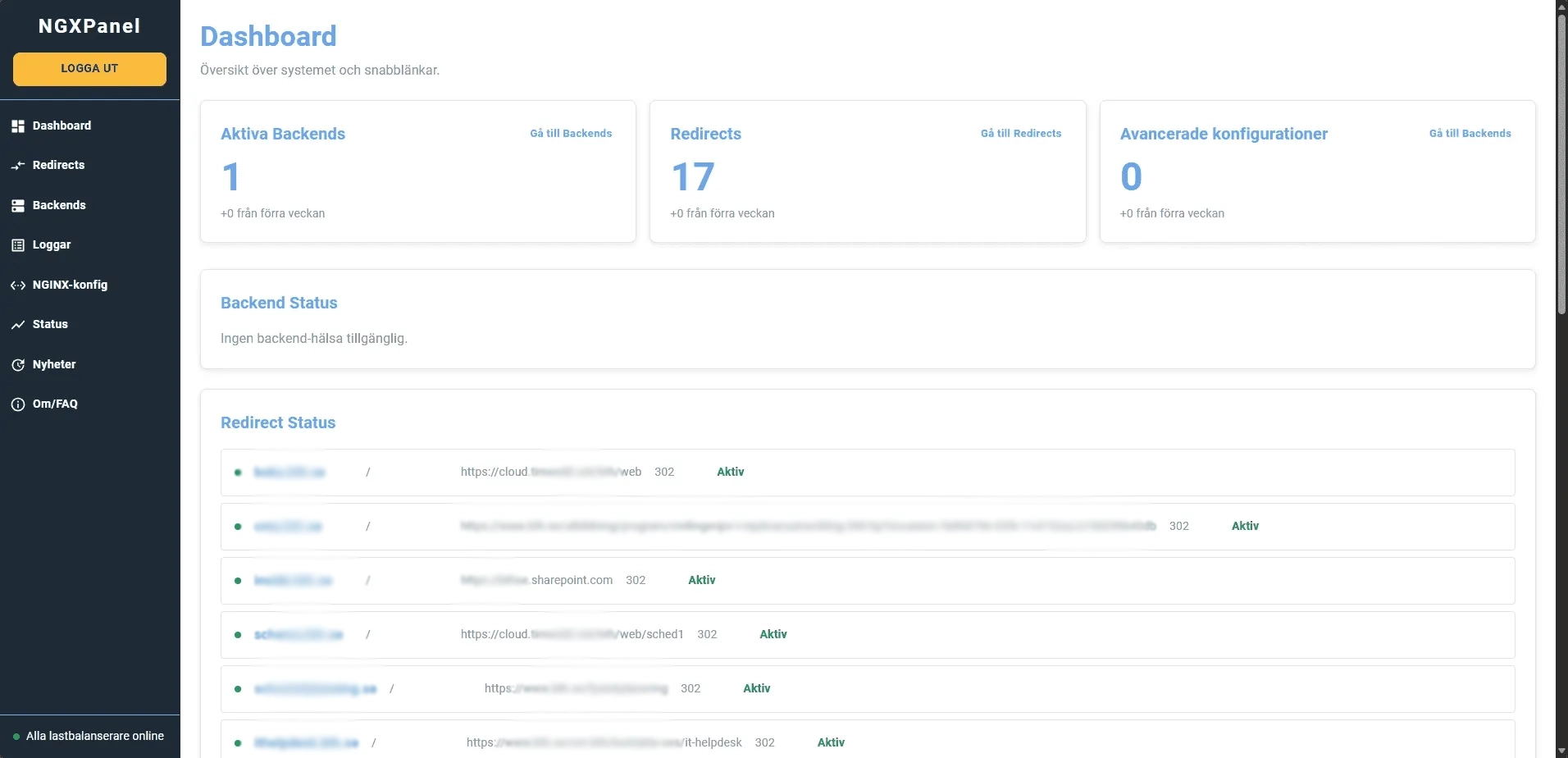
I built a load balancer control panel that replaced a fragile legacy redirect workflow with a safer and more maintainable NGINX platform. The system centralizes redirect management, SSL lifecycle handling, and backend pool updates, with validation and rollback support designed for real operations.
TL;DR
A central web control panel for redirects, SSL (Let's Encrypt), and backend pools in a two-node NGINX high-availability setup for a business client. Result: Safer deployments, fewer manual mistakes, and proven stability under production traffic, with 300,000+ redirect hits handled as of 2026-03-19.
1 month
Development time
Solo project
Collaboration
Success
Project outcome
100%
Client satisfaction
The challenge
Redirect and SSL operations were fragmented across older tooling and manual server steps. This made routine changes risky and slowed down response time when updates were needed.
My approach
I built a Django + React control panel that generates and deploys NGINX config safely, integrates Certbot for certificates, and supports a two-node setup with backup and rollback.
Technical features
Built with modern technologies and best practices for reliability and performance
Technology stack
Modern technologies and frameworks for optimal performance
Security and quality
Built with security best practices and quality assurance
Clean architecture
Well-structured codebase following industry standards
Performance
Optimized for speed, scalability, and user experience
Key features
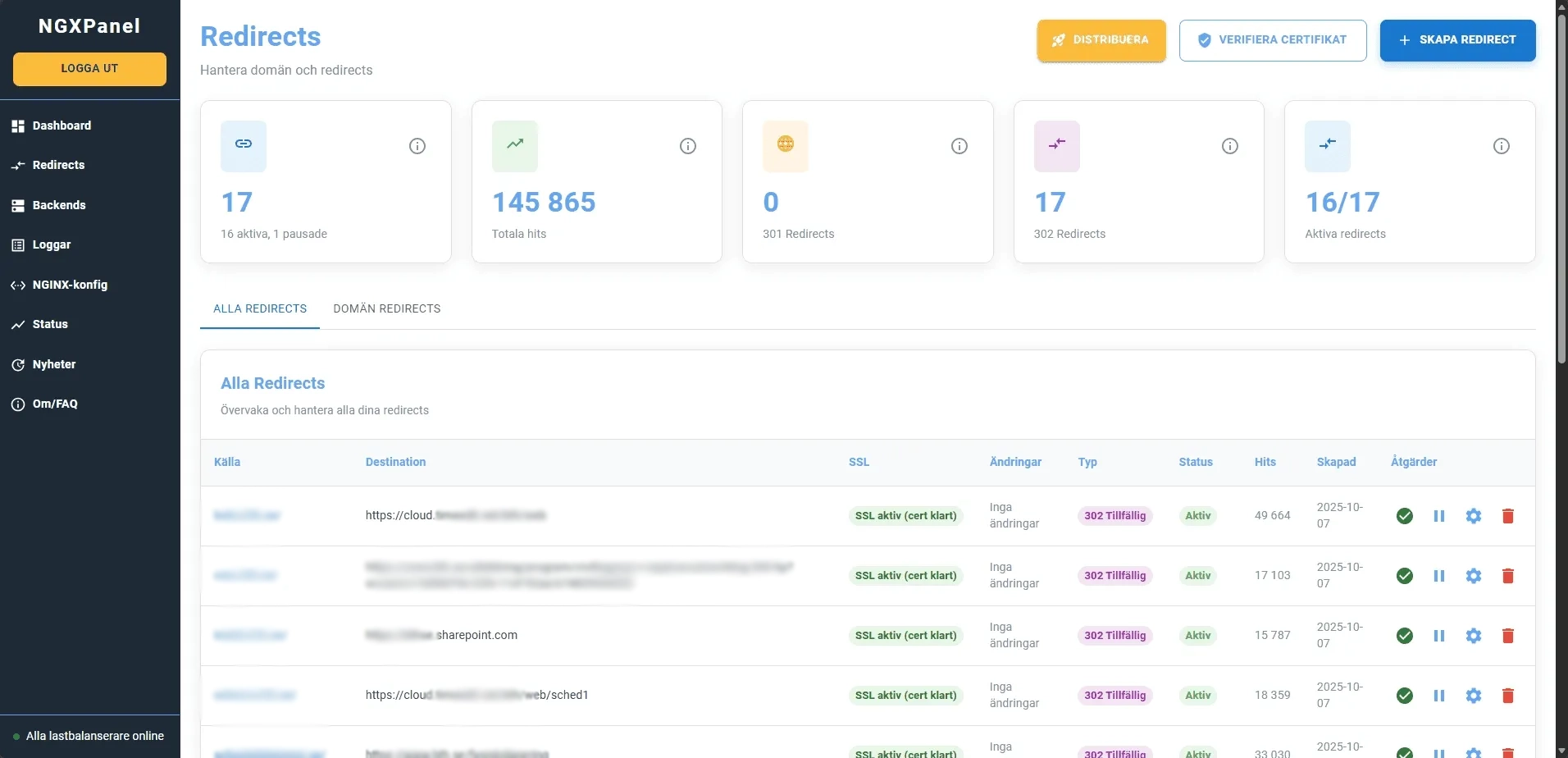
Centralized management for redirects, domains, and target backends
Safe deploy flow with validation, backup, and rollback
SSL certificate handling with Let's Encrypt integration
Two-node HA-ready deployment model
Clear audit trail for operational changes
Project gallery
Selected screenshots from the project.


Technologies used
Related articles
Common questions
What does the load balancer control panel actually do?
It gives operators a single web interface to manage NGINX redirects, SSL certificates, and backend pools across two load balancer nodes, instead of editing config files by hand.
How does it keep NGINX configuration changes safe?
Every change is validated before it is applied, backed up automatically, and rolled back if the reload fails, so a bad config can't take down live traffic.
How much traffic has the platform handled?
As of 2026-03-19, the proxy and redirect flow has handled more than 300,000 hits in production, which is the main evidence for its reliability.
Project impact
The team gained a safer and faster way to handle redirects and SSL. As of 2026-03-19, the proxy and redirect flow has handled more than 300,000 hits across live traffic, which validates both reliability and secure implementation. Operational changes also became more predictable, easier to audit, and less dependent on manual server access.