
MVP Development for Small Businesses: Validate Ideas Without Breaking the Bank
Build an MVP for your small business idea. Learn when an MVP makes sense, what to include, and how to launch without a big upfront investment.
You have a business idea. Maybe it's a new service, a product concept, or a way to solve a problem you've noticed in your industry. The question is: how do you know if it will work before investing significant time and money?
This is where an MVP (Minimum Viable Product) comes in. An MVP is the simplest version of your idea that you can build to test whether it solves a real problem for real people. For small businesses, an MVP is often the smartest way to validate an idea without committing to a full build.
TL;DR: An MVP is the smallest useful version of your idea. Build one core workflow in two to six weeks, test with real users, then expand only what proves valuable. Paid MVPs typically start around SEK 20,000. Start with a free prototype for direction; if you proceed, normal prices apply by scope.
What is an MVP and why does it matter for small businesses?
An MVP is the most basic version of your product or service that still delivers value to users. It includes only the core features needed to test your main hypothesis: "Will people use this and find it valuable?"
For small businesses, an MVP is particularly valuable because:
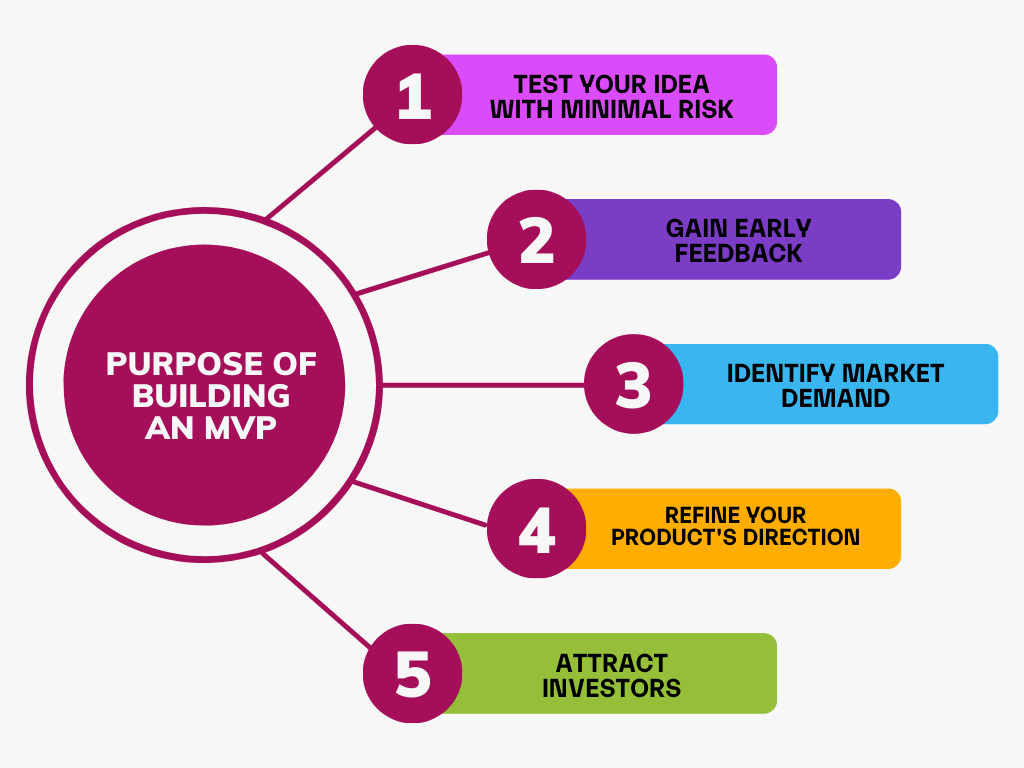
- Lower risk: You invest less time and money upfront, reducing the financial risk if the idea doesn't work out.
- Faster validation: You can test your idea in weeks instead of months, getting feedback quickly.
- Real user feedback: Instead of guessing what users want, you build something simple, put it in front of real people, and learn from their reactions.
- Iterative improvement: Once you validate the core idea, you can add features based on actual user needs, not assumptions.
- Proof of concept: An MVP that works can help you secure funding, attract partners, or justify a larger investment.
When an MVP makes sense
Not every project needs to start as an MVP. Here's when an MVP approach is most valuable:
Good candidates for MVP development
- New business ideas: You want to test whether there's demand before building the full solution.
- Uncertain market fit: You're not sure if your target audience will actually use what you're building.
- Limited budget: You need to validate the idea before committing to a larger investment.
- Feature uncertainty: You have multiple ideas for features but aren't sure which ones matter most.
- Time-sensitive opportunities: You need to get to market quickly to test an opportunity.
When to skip the MVP
- Well-defined requirements: You know exactly what you need and have validated the market already.
- Proven business model: You're building something similar to what already exists and works.
- Complex enterprise requirements: The project needs extensive features from day one.
- Regulatory or compliance needs: You need full functionality to meet legal requirements.
What should an MVP include?
The key to a good MVP is focusing on the core value proposition. Ask yourself: "What's the one thing this product must do to be useful?" Everything else can wait.
Core features (must have)
- The main problem-solving feature: Whatever your product does to solve the user's core problem.
- Basic user interface: Simple, functional design that lets users accomplish the main task.
- Essential data capture: If you need user information, collect the minimum necessary.
- Core workflow: The primary path users take to get value from your product.
Nice to have (can wait)
- Advanced analytics and reporting
- Multiple user roles and permissions
- Complex integrations
- Advanced design and animations
- Mobile apps (web version is often enough for MVP)
- Payment processing (unless it's core to the value proposition)
MVP development process
Building an MVP follows a structured process:
1. Define the core problem
Start by clearly articulating the problem you're solving. Be specific. "Help small businesses manage inventory" is better than "business management software."
2. Identify the minimum solution
What's the simplest thing you can build that solves this problem? Strip away everything that isn't essential. If you can't explain the core value in one sentence, you're probably trying to do too much.
3. Build quickly
An MVP should take 2-6 weeks to build, not months. If it's taking longer, you're probably including too many features. Cut scope, not quality.
4. Test with real users
Put your MVP in front of real people who have the problem you're solving. Watch how they use it. Ask what works and what doesn't. This feedback is gold.
5. Iterate based on feedback
Use what you learn to improve. Add features that users actually need, remove things that don't matter, and refine the core experience.
Common MVP mistakes to avoid
Many small businesses make these mistakes when building an MVP:
- Including too many features: An MVP should do one thing well, not many things poorly.
- Perfectionism: Don't wait for it to be perfect. Ship it, get feedback, improve.
- Ignoring user feedback: If users tell you something doesn't work, listen. They're the ones who will use it.
- Skipping validation: Building an MVP and never showing it to anyone defeats the purpose.
- Over-engineering: Use simple solutions. You can always upgrade later if needed.
How I build MVPs for small businesses
When I work with small businesses on MVPs, I focus on custom development that validates your idea while building something you can actually use and scale. Here's my approach:
Custom MVP development
How IvyyDev scopes differ (starting prices):
- Website (known brochure or service site): from SEK 8,500 buy once, or subscription from SEK 1,295/month. See web development, buy once, and website subscription.
- Web app (known business tool: portal, booking, admin): from SEK 18,000. See web apps.
- MVP (validate an unproven product idea): typically SEK 20,000 to 60,000 depending on scope.
Exact price depends on scope, functionality, and goals. All projects are quoted clearly upfront.
Why MVP is not the same as a web app:
A web app usually solves a known need with a clear feature list (for example a customer portal you already understand). An MVP is for when the product idea is still uncertain: you need product decisions, a tight first workflow, and real-user learning before you invest in a full build. That product-thinking layer is why MVP work often starts around SEK 20,000 even when a focused web app can start from SEK 18,000.
Ongoing costs:
- Hosting: about SEK 200 to 500/month for most small businesses
- No platform or license fees
- SSL certificate usually included
Time: 2-6 weeks
What you get:
- Full control over scope: You define exactly what's included, with prioritized delivery and ownership without restrictions.
- Built specifically for your idea: Not a template or no-code workaround, but a real solution designed for your needs.
- Scalable foundation: Built with modern technology that can grow if your idea proves valuable. This isn't a prototype you'll throw away, but a foundation you can build on.
- Direct collaboration: You work directly with me. No account managers, no layers of communication. Fast decisions, clear feedback loops.
- Professional quality: Even as an MVP, it's built to professional standards. Ongoing iterations and optimizations are possible.
- Fast delivery: Most MVPs are completed in 2-6 weeks, not months.
This approach works best when you have a unique idea that needs custom functionality, or when you want to validate something that doesn't fit into existing templates or platforms. An MVP is a smarter investment than building a full product upfront. You validate your idea while building something you can actually use and scale.
Free prototype before a paid MVP
Prototype: Free (direction and demo, not a finished product)
Paid MVP (web): from about SEK 20,000 depending on scope; larger MVPs higher (often SEK 20,000 to 60,000). Websites from SEK 8,500 and web apps from SEK 18,000 are separate offers.
MVP timeline: usually 2 to 6 weeks after an agreed quote
What you get in the prototype phase:
- Direction before commitment: see layout and flow before paid development.
- Clearer scope: easier to quote the right MVP.
- Direct dialogue: you work with me, not an agency chain.
- Clear next step: if you proceed, normal prices apply after written scope.
Important: The prototype is free. A working MVP or full product is paid delivery after a quote. See web development for how the flow works.
If the prototype shows the idea holds up, we can plan a paid MVP with written scope. If it does not, you have avoided a larger investment early.
Real MVP examples from my work
Here are some real examples of MVPs I've built for small businesses:
Example 1: Service booking MVP
Problem: Small service business needed a way for customers to book appointments online without expensive booking platforms.
MVP: Custom booking form with email notifications and basic calendar integration
Time: 2 weeks
Cost: SEK 22,000
Result: Validated that customers would use online booking. The business then expanded it into a full booking system with payment processing, saving thousands compared to subscription-based booking platforms.
Example 2: Internal tool MVP
Problem: Business needed to automate a manual reporting process that was taking hours each week.
MVP: Custom dashboard that pulled data from their main system and generated basic reports automatically
Time: 3 weeks
Cost: SEK 35,000
Result: Proved the value of automation. The business saved 5+ hours per week and expanded the tool to include multiple data sources and advanced analytics.
Related examples: See the network operations tool and load balancer control panel portfolio case studies for similar internal tool work I've built for small business clients.
Example 3: Landing page MVP
Problem: Startup wanted to test if there was interest in a new service before building the full platform.
MVP: Custom landing page with email signup, service description, and basic information
Time: 1 week
Cost: SEK 20,000
Result: Collected 200 signups in the first month, validated demand, and then built the full service based on what those early signups actually wanted.
From MVP to full product
Once your MVP validates the core idea, you can decide how to proceed:
- If the MVP works well: Add features based on user feedback. Build the full product incrementally.
- If the MVP shows promise but needs changes: Iterate on the MVP, refine the core experience, then expand.
- If the MVP doesn't work: You've learned valuable lessons without a large investment. Pivot or move on.
The key is using the MVP as a learning tool, not as a final product. Let user feedback guide your next steps.
Why a free prototype is a smart first step before an MVP
For many small businesses, a free prototype is the smart first step before a paid MVP. Here is how it works:
- Direction without full cost: You see layout and flow before committing to a paid MVP.
- Clearer quote: Once direction is clear, scope and price are easier to set.
- Direct collaboration: You work directly with me. No account managers, no layers of communication.
- Normal prices if you proceed: The prototype is free. If you continue with an MVP or full build, normal prices apply by scope.
- Clear next step: if you proceed, normal prices apply after written scope.
If the prototype shows the idea holds up, we plan a paid MVP with written scope. If it does not, you have avoided a larger investment early.
Getting started with your MVP
If you're ready to build an MVP for your small business idea, here's how I recommend approaching it:
- Define your core problem: What specific problem are you solving? Be as specific as possible. "Help small businesses manage inventory" is better than "business management software."
- Identify your target users: Who has this problem? Can you reach them to test your MVP?
- List must-have features: What's the absolute minimum needed to solve the problem? Everything else can wait.
- Consider a free prototype: If you're unsure about committing to a paid MVP, a free prototype gives you direction first. If you proceed, normal prices apply.
- Plan for feedback: How will you collect and use user feedback to improve? I'll help you think through this.
Frequently asked questions
What is an MVP for a small business?
An MVP is the smallest version of your product or service that still solves the core problem for real users. For small businesses it is a way to test demand before a full build.
When should a small business build an MVP?
When you have a new idea, uncertain market fit, or limited budget and need proof that people will use the solution before investing in every feature.
How long does MVP development take?
Most MVPs take two to six weeks when scope stays focused on one core workflow. Longer timelines usually mean too many features for a first version.
How much does an MVP cost?
Custom MVPs for small businesses often land around SEK 20,000 to 60,000 depending on scope. Exact price is quoted upfront after the core problem is defined.
Can I start with a free prototype before a paid MVP?
Yes. Web and app projects start with a free prototype or demo so you see the direction. If you proceed with an MVP or full build, normal prices apply by scope.
Conclusion
An MVP is one of the most powerful tools a small business can use to validate ideas without large upfront investments. By focusing on the core problem, building quickly, and learning from real users, you can test whether your idea has merit before committing to a full build.
When I work with small businesses on MVPs, I focus on custom development that validates your idea while building something you can actually use and scale. You get professional quality, direct collaboration, and a solution built specifically for your needs.
If you're uncertain about committing to a paid MVP, a free prototype is a strong first step. You see direction before a quote. If you proceed, normal prices apply by scope.
If you have a business idea you want to validate with an MVP, feel free to book a consultation. I work directly with small businesses to build MVPs that validate ideas and provide real value, without the complexity and overhead of agencies or the limitations of templates.
Jamie Bech
Senior Developer & Technical Specialist
I'm a senior developer with expertise in modern web technologies, infrastructure, and business automation. With over 8 years of experience, I specialize in creating efficient solutions that help businesses scale and grow.
Related Articles
More guides on IT, web, and practical AI for small businesses and home users