Free Prototype: The First Step Before a Paid Website
How IvyyDev's free web prototype works: you see direction before you commit, then a full website, portal, or web app is priced at normal rates by scope.
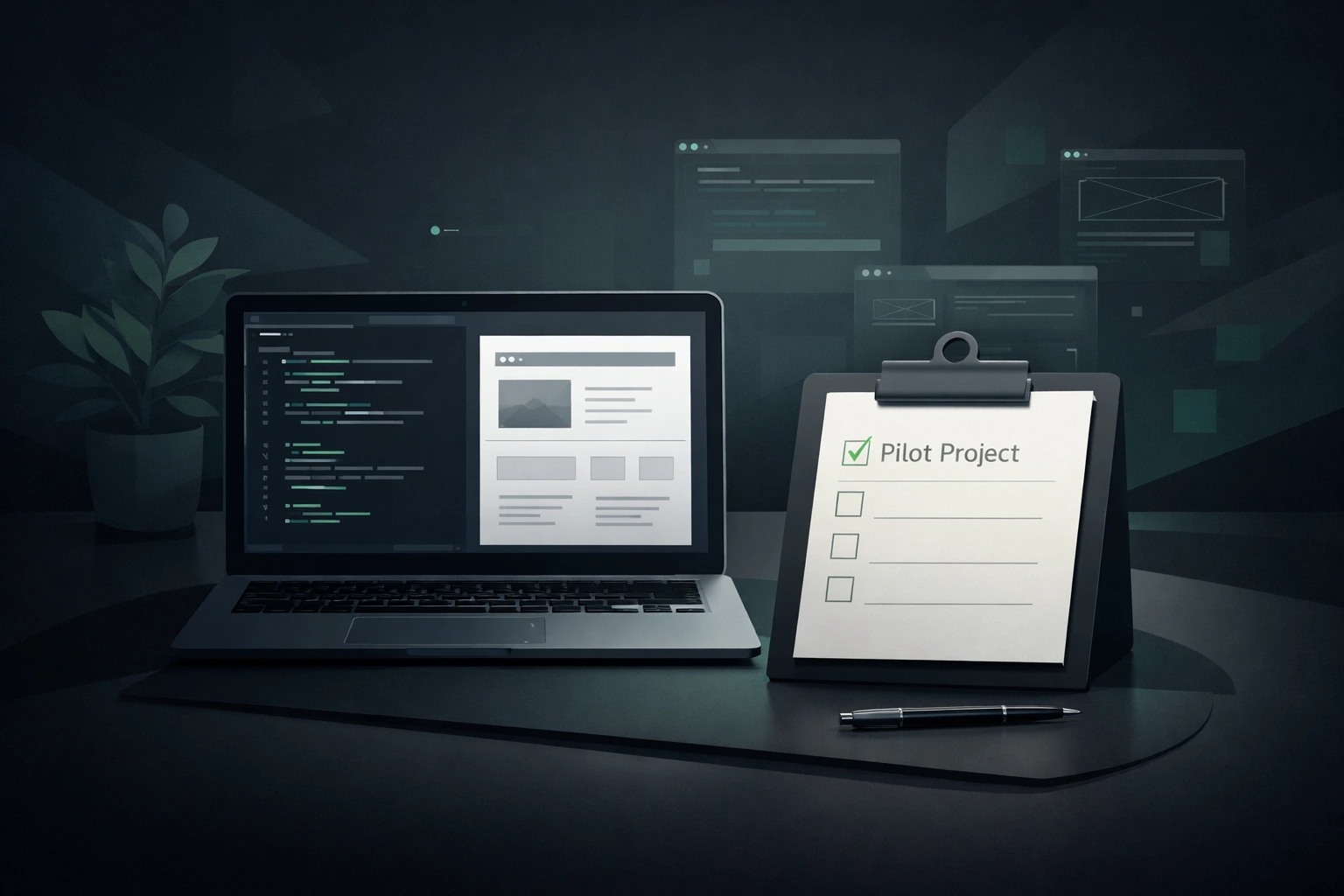
If you run a small business, you've probably thought about building a website or a simple web app. Maybe you need a landing page for a new service, an internal tool, or a clearer online presence. The hard part is rarely knowing that something is needed. It's knowing how it should look and feel before you spend money on a full build.
This is where a free prototype makes sense as a first step. It shows direction, structure, and tone before you decide.
TL;DR: A free prototype (or demo) shows direction before you commit. If you continue to a website, portal, or web app, normal paid pricing applies based on scope.
Why small businesses struggle with web projects
Most small businesses face the same challenges with web development:
- Unclear scope: It's hard to know exactly what you need until you see something concrete. A simple landing page can quickly become more pages, forms, and integrations.
- Budget uncertainty: Without a clear direction, costs are hard to estimate. You risk paying for the wrong thing, or delaying the project for too long.
- Time investment: Even a small project needs your time for content, feedback, and decisions. A tight demo first makes that investment clearer.
- Finding the right developer: Agencies often mean layers of communication. For small projects that can feel heavy. At the same time, you want to see how collaboration feels before ordering a full build.
A prototype addresses that uncertainty: you start small, with clear boundaries, and you get something visual to discuss before price and delivery for the full solution.
Website vs simple web app: what do you actually need?
Before you move forward, it helps to clarify what you're trying to build. The distinction affects scope, timeline, and price.
Website (static or content-focused)
A website is primarily informational. Think landing pages, service pages, portfolio sites, or small business sites. The goal is to present information clearly and help visitors act: contact you, learn about services, or book.
Good for: Service businesses, consultants, local businesses, portfolio sites, campaign pages.
Simple web app (interactive tool)
A web app is a tool that does something. It might automate a manual process, provide a dashboard, or manage a workflow. Examples include internal panels, simple CRMs, booking systems, or calculators.
Good for: Automating repetitive tasks, internal tools, MVPs to test business ideas, simple data management.
Many small businesses start with a website and later realize they need a web app for a specific process. A prototype can help you see which path fits before you price a full project.
What is a free prototype and why does it make sense?
A free prototype is a direction-setting demo. It can show layout, key messaging, mobile view, and one to two simple flows. The point is that you can say yes or no to a direction before you quote the paid build.
This structure works because:
- Low barrier to start: You see direction without paying for the full delivery first.
- Clear boundaries: The prototype stays intentionally tight. It is not a complete site with every page, integration, and piece of content.
- Faster decisions: Once you see something concrete, choosing scope and budget gets easier.
- Direct collaboration: You work with me, not through several layers, so feedback moves quickly.
- Honest pricing afterward: If you continue, normal paid prices apply based on what you actually build.
The prototype is a first step. A finished website, portal, or web app is a separate, paid engagement.
What a free prototype typically includes
Every prototype looks a bit different, but here's a practical baseline:
Scope
- Visual direction for a landing page or a small core flow
- Responsive feel on mobile and desktop
- Basic structure for headlines, messaging, and calls to action
- Enough for you to judge tone, clarity, and next steps
Timeline
Most prototypes take a few days to a couple of weeks, depending on how clear the problem is and how quickly you can give feedback.
What's not included
- A finished production website with all pages and content
- E-commerce, payments, or complex integrations
- Long-term maintenance and support
- Unlimited revisions
The goal is to show direction, not to deliver the full solution for free. When the direction feels right, we set scope and price for the paid build.
What happens when you continue
If the concept prototype shows the right path and you want a complete website or web app, normal pricing by scope applies. Websites at IvyyDev from SEK 8,500 (basic), SEK 11,500 (with contact), and SEK 15,000 (editable content). Website subscription from SEK 1,295/month. Web apps and digital tools from SEK 18,000.
Read more about packages on the web development page, or see the guide to website cost for small businesses.
Who this prototype is for (and who it's not)
Good fit
- Small businesses and solo founders: You have a clear idea but want to see direction before you order.
- Consultants and service businesses: You need a professional presence but want to compare approaches first.
- Early-stage startups: You want to test how a core flow could look before investing in a larger build.
- Businesses with a specific need: You want to see whether a simple tool or a clear service site is the right start.
Not a good fit
- Large organizations with enterprise requirements: Those usually need paid discovery and planning from the start.
- Complex requirements up front: E-commerce, payments, and heavy integrations belong in paid scope, not a free demo.
- Expecting a finished site at no cost: The prototype is direction. Full delivery is paid.
- Unclear goals: If you don't know which problem to solve, a short consultation is often a better first step.
How to approach a prototype
If you're considering a free prototype, here's how to make it useful:
- Define the problem clearly: What specific problem are you trying to solve? Not "I need a website," but "potential clients should understand my services and contact me easily."
- Keep expectations tight: A prototype should show direction, not solve everything at once.
- Be available for feedback: Short, clear feedback helps you know quickly whether the direction fits.
- Gather content early: Text, images, and basic facts matter when you move into the paid delivery.
- Decide the next step deliberately: After the prototype, you choose scope and a quote for the full build.
Remember: the goal is not to get a perfect solution for free. The goal is to reduce risk before you invest in the right scope.
Frequently asked questions
What is included in a free prototype?
A direction-setting demo: layout, key messaging, and often one to two core flows. It shows how a solution can feel, but it is not a finished website, portal, or web app.
Is the prototype the same as a finished website?
No. The prototype is free and meant to show direction before you commit. A full website, portal, or web app is priced by scope when you move forward.
What does it cost to continue after the prototype?
Normal paid prices based on scope. Websites from SEK 8,500 (basic), SEK 11,500 (with contact), and SEK 15,000 (editable content). Website subscription from SEK 1,295/month. Web apps from SEK 18,000.
How long does a prototype take?
Usually a few days to a couple of weeks, depending on how clear the problem is and how quickly you can give feedback on direction.
What happens after an approved prototype?
We agree on scope and a fixed or clear quote for the paid build. The prototype becomes the reference, not the finished delivery.
Next steps
If you run a small business and want to see direction before ordering a website or web app, a free prototype is a practical first step. It shows how the solution can feel. When you continue, normal paid pricing applies based on scope.
Learn more about web development and packages, or contact me and we'll discuss whether a prototype is the right start for you.
Jamie Bech
Senior Developer & Technical Specialist
I'm a senior developer with expertise in modern web technologies, infrastructure, and business automation. With over 8 years of experience, I specialize in creating efficient solutions that help businesses scale and grow.
Related Articles
More guides on IT, web, and practical AI for small businesses and home users